



Protegemos tu salud a través de la Ciencia
Investigación
Evaluación de riesgo
Líneas de investigación
Contenidos con Investigacion .
Evaluación de riesgo
La unidad colabora y proporciona asesoramiento científico-técnico a diversas organizaciones internacionales, como la European Partnership for Alternative Approaches to Animal Testing (EPAA), la Organización de las Naciones Unidas para la Alimentación y la Agricultura (FAO) y la Unión Internacional de Química Pura y Aplicada (IUPAC). Además de realizar evaluaciones de riesgo regulatorias de sustancias químicas, estamos involucrados en proyectos de investigación que desarrollan nuevas metodologías de evaluación de riesgo. Las líneas de investigación incluyen el desarrollo, utilización e implementación de:
-
- “Integrated Approaches to Testing and Assessment (IATAs)” para evaluar de manera integral los riesgos de las sustancias químicas, combinando diferentes fuentes de datos y evidencia, como datos in vitro, in silico y estudios en animales.
-
- “Adverse Outcome Pathways (AOPs)” y redes AOPs para comprender mejor los mecanismos moleculares y biológicos que conducen a los efectos adversos en la salud humana y el medio ambiente como resultado de la exposición a sustancias químicas.
-
- Métodos de evaluación de riesgos probabilísticos que tienen en cuenta la variabilidad inherente en los datos y las incertidumbres asociadas con los procesos de evaluación. La interpretación de resultados y series de datos existentes nos permite obtener un valor añadido en términos de efectos sobre la salud, humana o ambiental, así como la integración de diferentes fuentes de información.
Publicaciones destacadas
Lessons learnt on recruitment and fieldwork from a pilot European human biomonitoring survey
Fiddicke U, Becker K, Schwedler G, Seiwert M, Joas R, Joas A, Biot P, Aerts D, Casteleyn L, Dumez B, Castaño A, Esteban M, Angerer J, Koch HM, Schoeters G, Den Hond E, Sepai O, Exley K, Knudsen LE, Horvat M, Bloemen L, Katsonouri A, Hadjipanayis A, Cerna M, Krsková A, Jensen JF, Nielsen JKS, Rudnai P, Közepésy S, Gutleb AC, Fischer ME, Ligocka D, KaminskaJ, Reis MF, Namorado S, Lupsa IR, Gurzau AE, Halzlova K, Mazej D, Tratnik JS, Rivas TC,Gómez S, Berglund M, Larsson K, Lehmann A, Crettaz P, Dewolf MC, Burns D, Kellegher A, Kolossa-Gehring M. Lessons learnt on recruitment and fieldwork from a pilot European human biomonitoring survey. Environ Res. 141:15-23. 2015.
DOIMercury exposure in Ireland: Results of the DEMOCOPHES human biomonitoring study
Cullen E, Evans D, Davidson F, Burke P, Flanagan A, Griffin C, Kellegher A, Mannion R, Mulcahy M, Ryan M, Biot P, Casteleyn L, Castaño A, Angerer J, Koch HM, Esteban M, Schindler BK, Navarro C, Kolossa-Gehring M, Fiddicke U, Schoeters G, Den Hond E, Sepai O, Exley O, Bloemen L, Knudsen LE, Joas R, Joas A, Aerts D. Mercury exposure in Ireland: Results of the DEMOCOPHES human biomonitoring study. Int J Environ ResPublic Health. 11: 9760-9775. 2014.
DOISerum PCB levels in a representative sample of the Spanish adult population: The BIOAMBIENT.ES project
Huetos O, Bartolomé M, Aragonés N, Cervantes-Amat M, Esteban M, Ruíz-Moraga M, Pérez-Gómez B, Calvo E, Vila M, BIOAMBIENT.ES, Castaño A. Serum PCB levels in a representative sample of the Spanish adult population: The BIOAMBIENT.ES project. Sci Total Environ. 493: 834-844. 2014.
DOIThe European COPHES/DEMOCOPHES project: Towards transnational comparability and reliability of human biomonitoring results
Schindler BK, Esteban M, Koch HM, Castaño A, Koslitz S, Cañas A, Casteleyn L, Kolossa-Gehring M, Schwedler G, Schoeters G, Den Hond E, Sepai O, Exley K, Bloemen L, Horvat M, Knudsen LE, Joas A, Joas R, Biot P, Aerts D, López A, Huetos O, Katsonourin A, Maurer-Chronakis K, Kasparova L, Vrbík K, Rudnai P, Naray M, Guignard C, Fischer ME, Ligocka D, Janasik B, Reis MF Namorado S, Pop C, Dumitrascu I, Halzlova K, Fabianova E, Mazejj D, Tratnik JS, Berglund M, Jönsson B, Lehmann A, Crettaz P, Frederiksen H, Nielsen F, McGrath H, Nesbitt I, De Cremer K, Vanermen G, Koppen G, Wilhelm M, Becker K, Angerer J. The European COPHES/DEMOCOPHES project: Towards transnational comparability and reliability of human biomonitoring results. Int J Hyg Environ Health. 217: 653-661. 2014.
DOI. Blood lead levels in a representative sample of the Spanish adult population: The BIOAMBIENT.ES project
Cañas AI, Cervantes-Amat M, Esteban M, Ruiz-Moraga M, Pérez-Gómez B, Mayor J, Castaño A, BIOAMBIENT.ES. Blood lead levels in a representative sample of the Spanish adult population: The BIOAMBIENT.ES project. Int J Hyg Environ Health. 217:452-459. 2014.
DOIHair mercury and urinary cadmium levels in Belgian children and their mothers within the framework of the COPHES/DEMOCOPHES projects
Pirard C, Koppen G, De Cremer K, Van Overmeire I, Govarts E, Dewolf MC, Van De Mieroop E, Aerts D, Biot P, Casteleyn L, Kolossa-Gehring M, Schwedler G, Angerer J, Koch HM, Schindler BK, Castaño A, Esteban M, Schoeters G, Den Hond E, Sepai O, Exley K, Horvat M, Bloemen L, Knudsen LE, Joas R, Joas A, Van Loco J, Charlier C. Hair mercury and urinary cadmium levels in Belgian children and their mothers within the framework of the COPHES/DEMOCOPHES projects. Sci Total Environ. 472:730-740. 2014.
DOIA systematic approach for designing a HBM Pilot Study for Europe
Becker K, Seiwert M, Casteleyn L, Joas R, Joas A, Biot P, Aerts D, Castaño A, Esteban M, Angerer J Koch HM, Schoeters G, Den Hond E, Sepai O, Exley K, Knudsen LE, Horvat M, Bloemen L, Kolossa-Gehring M, DEMOCOPHES consortium. A systematic approach for designing a HBM Pilot Study for Europe. Int J Hyg Environ Health. 217: 312-322. 2014.
DOIEconomic benefits of methylmercury exposure control in Europe: Monetary value of neurotoxicity prevention
Bellanger M, Pichery C, Aerts D, Berglund M, Castaño A, Cejchanova M, Crettaz P, Davidson F, Esteban M, Fischer ME, Gurzau AE, Halzlova K, Katsonouri A, Knudsen LE, Kolossa-Gehring M, Koppen G, Ligocka D, Miklavčič A, Reis MF, Rudnai P, Tratnik JS, Weihe P, Budtz-Jørgensen E, Grandjean P, DEMO/COPHES. Economic benefits of methylmercury exposure control in Europe: Monetary value of neurotoxicity prevention. Environ Health. 12:3. 2013.
DOIRisk of overestimation of urinary cadmium concentrations: interference from molybdenum
Cañas A, Esteban M, Cutanda F, Castaño A. Risk of overestimation of urinary cadmium concentrations: interference from molybdenum. ICHMET 2012 Conference proceedings. E3S Web of Conferences 1, 21003. 2013.
DOIBIOAMBIENT.ES study protocol: rationale and design of a cross-sectional human biomonitoring survey in Spain
Pérez- Gómez B, Pastor-Barriuso R, Cervantes-Amat M, Esteban M, Ruíz-Moraga M, Aragonés N, Pollán M, Navarro C, Calvo E, Román J, López-Abente G, Castaño A on behalf of BIOAMBIENT.ES. BIOAMBIENT.ES study protocol: rationale and design of a cross-sectional human biomonitoring survey in Spain. Environ Sci Pollut Res. 20: 1193-1202. 2013.
DOIAspectos prácticos de la fase pre-analítica del estudio de biovigilancia BIOAMBIENT.ES
Esteban M, Ruiz-Moraga M, Pérez-Gómez B, Castaño A y demás componentes del grupo BIOAMBIENT.ES. Aspectos prácticos de la fase pre-analítica del estudio de biovigilancia BIOAMBIENT.ES. Gac Sanit. 27: 77-80. 2012.
DOIMercury, lead and cadmium levels in the urine of 170 Spanish adults: A pilot human biomonitoring study
Castaño A, Sánchez-Rodríguez J E, Cañas A, Esteban M, Navarro C, Rodríguez-García AC, Arribas M, Díaz G, Jiménez-Guerrero JA. Mercury, lead and cadmium levels in the urine of 170 Spanish adults: A pilot human biomonitoring study. Int J Hyg Environ Health.215: 191-195. 2012.
DOINon-invasive matrices in human biomonitoring: A review
Esteban M, Castaño A. Non-invasive matrices in human biomonitoring: A review. Environ Int. 35:438-449. 2009.
DOIShort-Term Ozone Exposure and Daily Mortality in Suburban and Rural Areas of Southern Europe
Maria Angela Doronzo; José Ramón Martinez Fernandez; Diana Gómez-Barroso; María Alonso-Colón; Beatriz Nuñez-Corcuera; Rebeca Ramis Atmosphere 2025-05-20 DOI: 10.3390/atmos16050625
DOIDifferent Ras isoforms regulate synaptic plasticity in opposite directions
López-Merino E, Fernández-Rodrigo A, Jiang JG, Gutiérrez-Eisman S, Fernández de Sevilla D, Fernández-Medarde A, Santos E, Guerra C, Barbacid M, Esteban JA, Briz V. EMBO J. 2025 Feb 21.
DOIEffects of 700 and 3500 MHz 5G radiofrequency exposure on developing zebrafish embryos.
Torres-Ruiz, M.; Suárez, O. J.; López, V.; Marina, P.; Sanchis, A.; Liste, I.; De Alba, M.; Ramos, V., Effects of 700 and 3500 MHz 5G radiofrequency exposure on developing zebrafish embryos. Sci Total Environ 2024, 915, 169475.
DOIA methodological framework for estimating ambient PM2.5 particulate matter concentrations in the UK. Journal of Environmental Sciences, 150, 676-691. Q1
David Galán-Madruga, Parya Broomandi, Alfredo Satyanaga, Ali Jahanbakhsi, Mehdi Bagheri, et al (2025).
DOIUrban environmental noise and depression causal pathway: Potential role of chronic conditions as mediator
Enrique Sanz Olea; Jesus León Hernández; Begoña Artíñano; Verónica Briz; Spyros Karakitsios; Dimosthenis Sarigiannis; Saul García Dos Santos; Beatriz Nuñez-Corcuera; Rebeca Ramis PLOS ONE 2025-05-07 DOI: 10.1371/journal.pone.0322874 Part of ISSN: 1932-6203
DOIImproving air pollution source apportionment in size-segregated PM using Pb isotope-based Bayesian mixing models in Tarragona (Spain)
Edson Plasencia Sánchez, Mònica Rosell, Clara Torrentó, Francisco Sánchez-Soberón, Joaquim Rovira, Jordi Sierra, Marta Schuhmacher, Albert Soler, David Widory (2025). Improving air pollution source apportionment in size-segregated PM using Pb isotope-based Bayesian mixing models in Tarragona (Spain). Atmospheric Research, 316, 107939.
DOIEnhanced mGluR5 intracellular activity causes psychiatric alterations in Niemann Pick type C disease
Ana Toledano-Zaragoza, Violeta Enriquez-Zarralanga, Sara Naya-Forcano, Víctor Briz, Rocío Alfaro-Ruíz, Miguel Parra-Martínez, Daniel N. Mitroi, Rafael Luján, José A. Esteban & María Dolores Ledesma. Enhanced mGluR5 intracellular activity causes psychiatric alterations in Niemann Pick type C disease. Cell Death and Disease (2024) 15:771.
DOIContenidos con Investigacion .
-
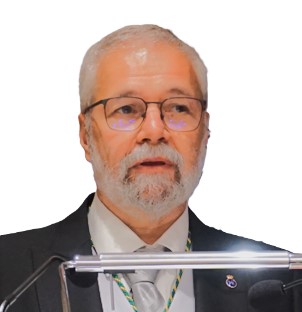
José Vicente Tarazona Lafarga
Jefe de Grupo. Profesor de Investigación de OPI
Código ORCID: 0000-0003-4920-3055
-

-
-
-



Listado de personal
Información adicional
La Unidad de Evaluación de Riesgo se creó como una unidad horizontal del CNSA en octubre de 2022, aprovechando la experiencia de investigadores del centro en evaluación de riesgos de plaguicidas y otras sustancias químicas, y la incorporación de nuevos investigadores. Nuestra misión es proporcionar una evaluación científica rigurosa y objetiva de los riesgos que las sustancias químicas pueden representar para las personas y el medio ambiente en diversas condiciones de exposición, en el marco de la aproximación “One Health”. La unidad ofrece a las diferentes Áreas del CNSA, así como a otros grupos del ISCIII interesados, una plataforma o “Laboratorio de Ideas” para obtener un valor añadido a sus resultados, mediante metodologías innovadoras de evaluación de riesgos.